Pattern generator
Truchet tiles that turn into mazes, organic curves or Bauhaus blocks, and symmetric charts in the style of antique cross-stitch. Pick a preset, change a slider, or describe your own.
Make this tool
Opens Blueprint with this request, ready to send or to change:
A pattern generator with Truchet tiles: arcs, diagonals, triangles and quarter circles, tile size, line weight, an accent color and a noise field that makes it more or less ordered
Free account, no credit card. Try every control on this page; export and keep the tool from your account.
Prefer your own coding agent? Build it with Claude Code, Codex or Cursor: connect your agent.
Presets
- Maze
- Organic
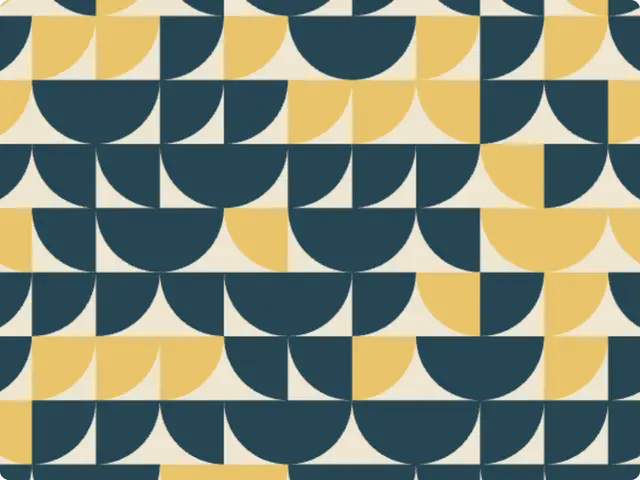
- Bauhaus
5 versions made with Truchet Patterns
The tool’s own output, from the same input as the version above: each of its presets, then other seeds. Every image comes straight from the tool.
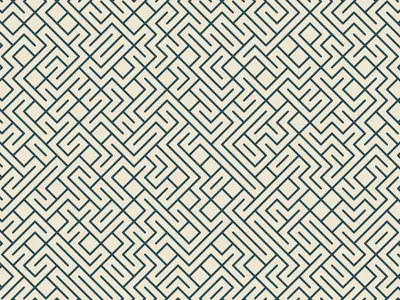
Maze preset 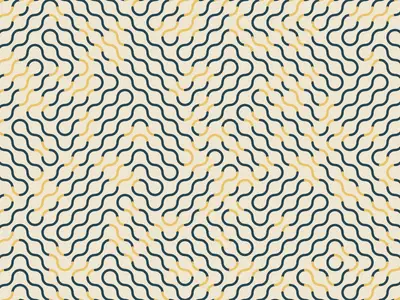
Organic preset 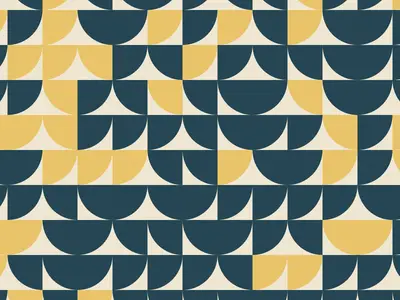
Bauhaus preset 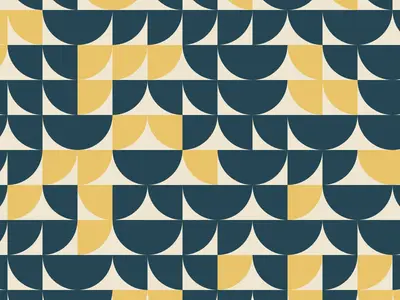
Seed 1207 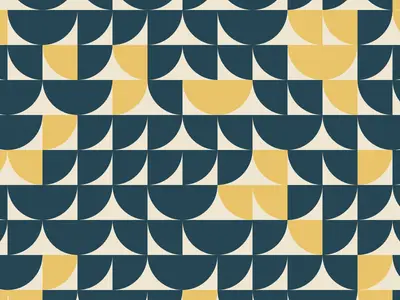
Seed 58311
Try the controls
Every slider, preset and option works here, without an account. To export or keep the tool, create a free account.
Truchet tiles: one tile, endless patterns
In 1704 the French priest and scientist Sébastien Truchet published a study of the patterns you can make with a single square tile split diagonally into two colors, simply by rotating it. Much later, the metallurgist Cyril Stanley Smith popularized a variant with two quarter-circle arcs, whose curves join from tile to tile into continuous, winding lines.
The idea is the basis of a lot of generative pattern work: one simple tile, a rule (or chance) for how it is rotated, and a surprisingly rich surface. Diagonals give mazes, arcs give flowing, organic lines, quarter circles give bold, blocky compositions close to Bauhaus graphics.
How this pattern generator works
The tool lays a grid of tiles over the frame and picks the rotation of each one. With Order at zero the choice is random; as you raise it, a noise field takes over, so neighboring tiles agree and the pattern becomes structured, with larger shapes and channels.
- Style: arcs, diagonals, triangles or quarter circles.
- Size and Weight: the tile size and the line thickness.
- Order: from random to guided by a noise field.
- Accent share: how many tiles take the accent color.
- Seed and Generate: a new pattern in one click.
- Background, Stroke and Accent: the three colors.
Two more pattern tools
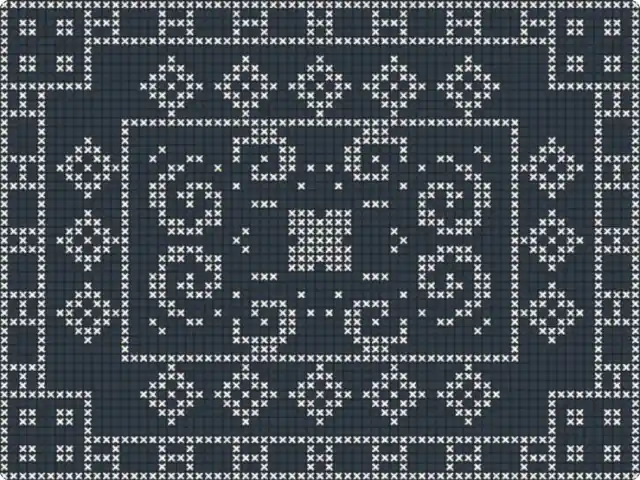
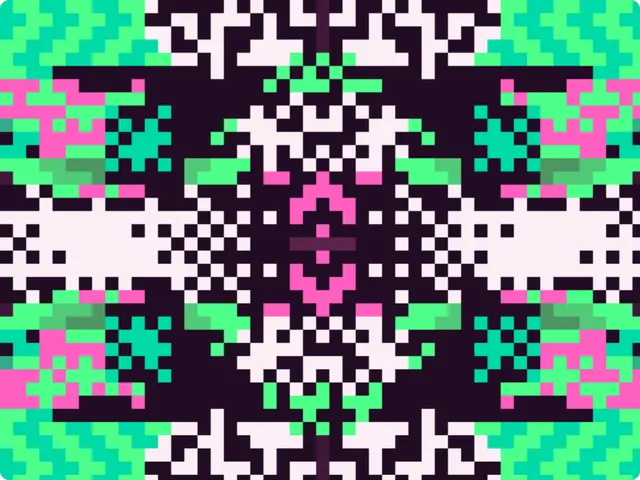
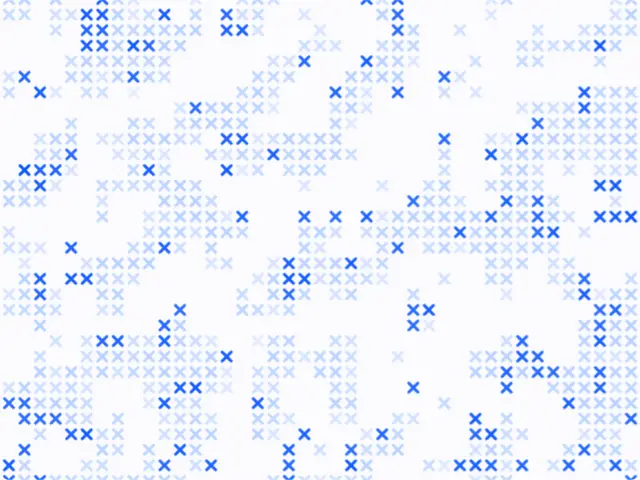
Cross-Stitch Tile, the tool of the cross stitch pattern generator page, builds a symmetric two-color chart filling the frame: borders, corner flowers, a diamond band, scrolls and a central rosette, each with its own controls. Mirror Pixel Totem, on the pixel art pattern generator page, builds four-way symmetric pixel art and lets you paint new zones with a mirrored brush. Both pages are linked under More tools.
What designers use it for
- Packaging, wrapping paper and labels.
- Wallpapers and backgrounds for websites, slides and apps.
- Textile and print-on-demand patterns.
- Brand systems where one tile family, in brand colors, gives endless variations.
Tips
Start from a preset (Maze, Organic or Bauhaus) and change one control at a time. Large tiles with a low accent share look calm and graphic; small tiles look like texture. Raise Order slowly: between about 0.6 and 0.9 the pattern keeps some surprise while showing larger structures. Use Generate to browse quickly, then note the seed of the one you like.
Describe the pattern you need
Wallpaper repeats, packaging patterns, textile charts, tile layouts: describe one and Blueprint builds the generator with presets and a Generate button. Vector tools also export SVG, which keeps lines sharp at any size.
Questions
What is a Truchet tile?
A square tile with a simple motif, such as a diagonal or two quarter-circle arcs, that is rotated to build a pattern. It is named after Sébastien Truchet, who studied these patterns in 1704.
Can I export patterns as SVG?
Tools that draw shapes on a 2D canvas, like the Truchet generator, export SVG as well as PNG once you have your own copy. Tools that work pixel by pixel export PNG.
Are the patterns seamless?
Not by default. Ask for a seamless repeat when you describe the tool, or ask for it as a change later.
More tools
What tool do you need?
Describe it in a sentence. Blueprint builds it with sliders, presets and export. Your first tool is free.
See how it works